Beyond the WIRE
Dr. S. RasheemAcross oceans and screens, The Wire became a cultural phenomenon; but also a distorted fun house mirror. To many outside Baltimore, the city became synonymous with crime, poverty, and corruption. Beyond simply impacting the city’s image, according to David Bramble, a downtown developer, it hurts the city’s efforts to raise capital. Dr. Raymond Winbush (Urban Research Institute) recounts, “When I say I’m from Baltimore, people say, ‘Oh, The Wire.’”
Dr. Joanne Martin (owner and co-founder of the National Great Blacks In Wax Museum) recalls a New York cab driver admitting, “I’m scared of y’all, I watched The Wire.”
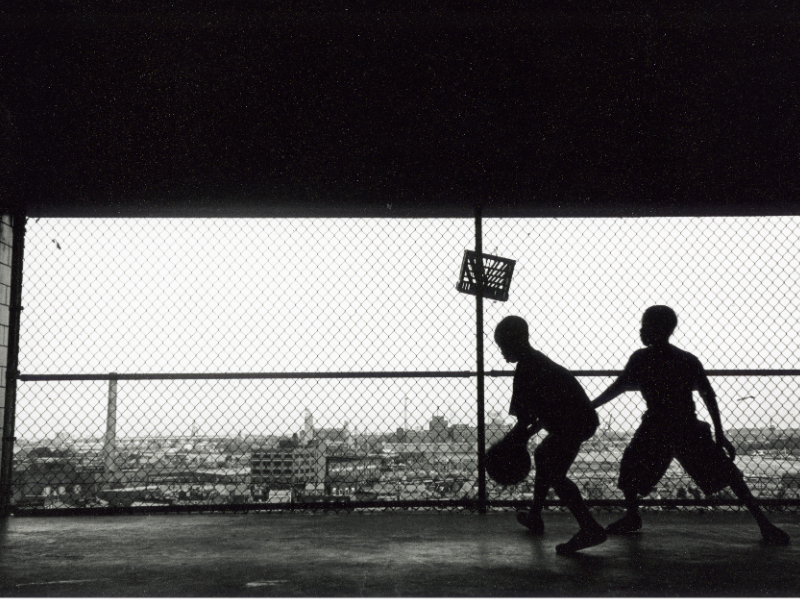
For Baltimoreans, this perception is exhausting and deeply unjust. As Senator Antonio Hayes reflects, “When I heard other people’s experience watching The Wire and their view of Baltimore as a result, that pissed me off.” Most Baltimoreans don’t argue that the depiction of the city is false in entirety; every major urban city has all of the same elements that Baltimore has. They are bothered by the hyperfocus on crime and poverty without context or showing the elements at play in Baltimore that counter the negativity. “They never told the real story,” says Imam Earl El-Amin. “They sensationalized poverty and destruction.” What The Wire left out were the roots, the policies, redlining, and systemic exclusion that produced those conditions and the people who resisted them every day with care, creativity, and courage.
To be fair the WIRE isn’t the first show of its kind to focus on criminal elements in the city; one television show didn’t paint this image alone; shows like, The Corner, Homicide and even some local news outlets have perpetuated a “city in crisis” narrative using titles like "Baltimore is Dying” in their reporting, magnifying dysfunction while ignoring daily victories. “For every bad story they give us, there are ten good ones,” says Mr. Charles Duggar. Yet those good stories rarely make the airwaves.
This Summer is the world premiere of an already sold out film called “Beyond the Wire” that flips that script, giving the microphone back to the people whose stories were distorted, showing Baltimore through its own lens; honest, proud, and unflinching.
At its heart, Beyond the Wire is both a critique and a celebration, a film about reclaiming Baltimore’s humanity from the wreckage of misrepresentation. “Baltimore is so much more than what you saw,” says Baltimore artist, Ernest Shaw. “In spite of poverty, food deserts, and systemic neglect, we still have success stories; people beating the odds every day.” Seymour Chambers (Historian, Prince Hall Masonic Lodge)
This documentary is a testament to that endurance. It honors the legacy of Black Baltimore, its organizations, churches, schools, and stoops; its mothers, mentors, and movement-builders. It acknowledges the pain of loss and the persistence of beauty.
And above all, it rejects the idea that Baltimore is defined by crime scenes or statistics. As Danise Jones-Dorsey declares, “I am not the lady who clutches her purse when she walks toward a young brother, I speak to him.” That spirit of courage, love, and defiance courses through every frame of Beyond the Wire.
Beyond the Wire dissects how entertainment and mass media have shaped the world’s gaze. The documentary doesn’t deny that The Wire captured pieces of truth, but it confronts the incomplete picture it painted. It lays bare the ongoing machinery of misrepresentation and exposes how perception has been weaponized against Baltimore and how residents have fought to reclaim their story. It’s a chronicle of communal loss and regeneration, a mosaic of memory, and a manifesto of belonging.
This is Baltimore: fierce, flawed, unforgettable. Not the fiction that others sold to the world, but the truth that endures beyond it.